How to Build an Accountability System for Quitting Porn (Without a Partner)
You don't need to tell a partner or friend to have real accountability. Here's how to build a private accountability system for quitting porn on your own.

Most accountability advice assumes you'll tell someone — a partner, a friend, an accountability app that reports to a contact. For a lot of people, that's genuinely not an option, whether because of privacy, the stigma involved, or simply not being ready to have that conversation. Accountability without another person is still possible; it just has to be built differently.
Why accountability works in the first place
The mechanism behind accountability isn't really about someone else judging you — it's about making the habit visible to a version of yourself that isn't in the moment of the urge. A private log, a tracker, a plan you wrote down while calm — all of these work the same way an accountability partner does: they represent your own longer-term intentions, showing up at the exact moment your in-the-moment self is trying to talk you out of them.
Build a version of "future you" into the system
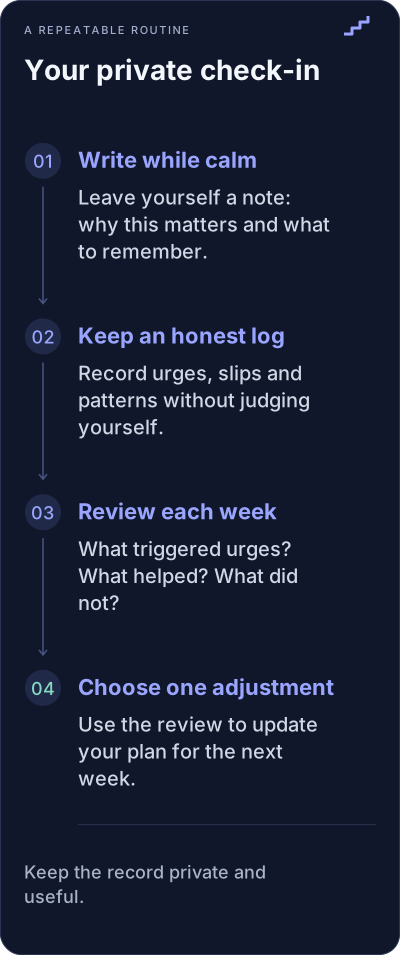
One concrete way to do this: write a short letter or note to yourself, while you're calm and clear-headed, to be read specifically in the moment of an urge — why you're doing this, what's actually at stake, what you'd want yourself to remember. Read during a craving, this note does some of what a partner's check-in would do: it interrupts the tunnel vision with a voice that isn't purely reactive.
Use a private tracker as your own witness
A private log — days clean, slips noted honestly, patterns over time — creates a kind of accountability to your own record, even with no other person involved. Seeing an honest, ongoing log of your own effort tends to matter more than people expect; it's harder to quietly abandon something you can see yourself have been actively working on for weeks.
Set your own checkpoints
Accountability partners often work by checking in at set intervals. You can build the same structure solo: a weekly review with yourself, on a set day, looking honestly at how the week went — no partner required, just a standing appointment with your own log and a few honest questions (what triggered urges, what helped, what didn't).
Consider anonymous accountability if you want more
If fully solo accountability doesn't feel like enough, there's a middle ground between "no one knows" and "my partner knows": anonymous recovery communities, where people share progress and setbacks without real names or real-life connection. This gets some of the external-accountability benefit without the privacy cost of telling someone in your actual life.
Privacy and accountability aren't opposites
The goal isn't to force social accountability where it doesn't fit your situation — it's to build a structure honest enough that you can't quietly lie to yourself about how things are going. That's achievable entirely on your own, with the right tools, and for a lot of people it's not just a fallback option — it's genuinely the more sustainable path.
Available on the App Store.
A structured plan to reduce or quit porn —
without shame, surveillance, or religion. Start your first cycle today.