Urge Surfing: How to Ride Out a Craving Without Acting On It
Urge surfing is a simple, well-studied technique for getting through a craving without acting on it. Here's how it works and how to actually practice it.

An urge feels, in the moment, like it's going to keep building until you either give in or explode. It won't. Urges have a shape — they rise, peak, and fall, usually within minutes, whether or not you act on them. Urge surfing is a technique built entirely around that fact.
Where the idea comes from
Urge surfing was developed originally for addiction and craving management more broadly, based on a simple observation: cravings are not a straight, ever-rising line. They spike, peak, and fade on their own, typically within 15–20 minutes, even without any intervention at all. The name comes from the idea of riding the wave of the craving rather than fighting it or being pulled under by it.
Why fighting the urge often backfires
The instinct when an urge hits is to fight it directly — white-knuckle it, distract hard, argue with yourself about willpower. This can work, but it also keeps your full attention locked onto the urge, which sometimes intensifies it rather than letting it pass. Urge surfing takes a different stance: instead of fighting the wave, you watch it, with a kind of curious distance, and let it move through on its own timeline.
How to actually do it
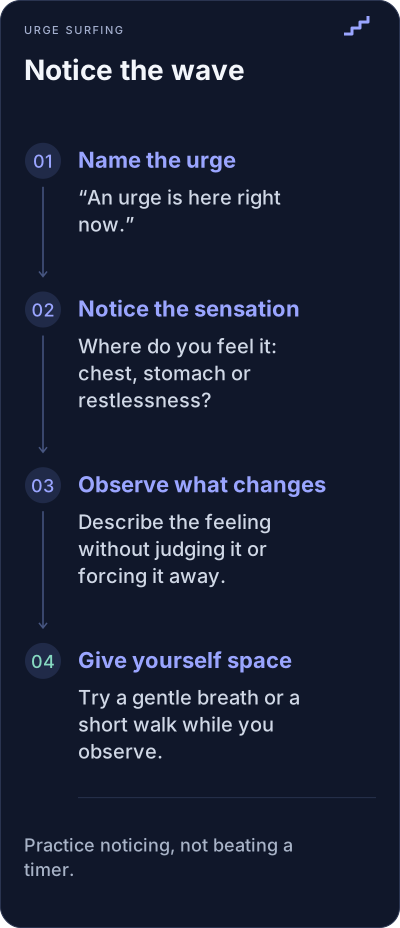
When an urge hits, the practice is roughly: notice it without judgment ("this is an urge, it's happening now"), locate where you feel it physically (chest, stomach, restlessness), and describe it to yourself like you're a neutral observer — rising, peaking, starting to fade — rather than a participant. Breathing slowly through it helps some people; others find it easier to just sit with a timer running, watching the intensity change rather than trying to make it go away.
What to expect the first few times
The first few times you try this, it can feel like it's not working — the urge feels just as intense five minutes in as it did at the start. That's normal; the skill takes practice, and the point isn't that the urge instantly shrinks, it's that you're building tolerance for sitting with discomfort without immediately resolving it through the habit. Over repeated practice, the peak tends to feel more predictable and less alarming.
Pairing it with something to do
Urge surfing on its own is often enough, but pairing it with a short, concrete action — stepping outside, doing ten push-ups, calling someone — gives your attention somewhere to go while the wave passes, which some people find easier than pure observation alone. There's no single right way to do this; the goal is riding out the 15–20 minutes without giving in, by whatever combination of techniques actually gets you through it.
It gets easier with repetition
Like most skills, urge surfing gets more effective the more you practice it — not because the urges themselves get weaker right away, but because you get faster at recognizing "this is a wave, it will pass" instead of "this is unbearable, I need it to stop right now." That recognition, repeated enough times, is often what makes the difference between a slip and a craving that just... passed.
Available on the App Store.
A structured plan to reduce or quit porn —
without shame, surveillance, or religion. Start your first cycle today.