How to Tell Someone You're Quitting Porn (If You Want To)
Thinking about telling a partner or friend you're cutting back on porn? Here's how to think through whether, when, and how — without turning it into a confession.

Some people change this habit entirely privately, and that's completely valid. Others want someone to know — a partner, a close friend — either for support or because it directly involves a relationship. If you're considering telling someone, here's how to think it through.
You don't owe anyone a confession
First: wanting to change a habit privately, on your own terms, without telling anyone, is a legitimate choice — not something to feel guilty about hiding. Plenty of people quit or reduce successfully without ever bringing it up to another person. If you're telling someone, do it because it genuinely helps you, not because you feel you "should" disclose it like a wrongdoing.
When it's worth telling someone
A few situations where sharing tends to help more than it costs:
- You're in a relationship where it's affecting intimacy or trust, and staying silent is creating distance anyway.
- You do better with outside accountability — some people genuinely change faster with someone checking in, others find it adds pressure that backfires. You know which type you are.
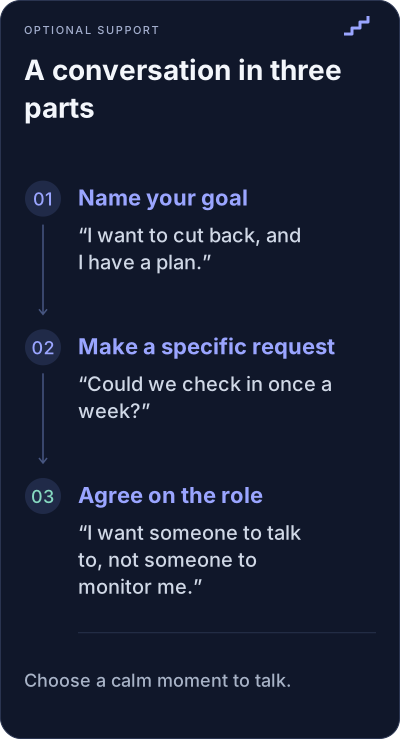
- You want emotional support, not just accountability — someone to talk to on a hard day, not someone monitoring you.
What accountability partners actually look like — and a caution
A lot of "accountability" apps push a specific model: a partner gets notified if you use certain apps, or gets screenshots of your activity. That can work for some people, but it's worth knowing it's a design choice, not the only option — and it puts real weight on the other person, who now has a monitoring role in your life. A simpler, lower-pressure version exists: someone you can talk to openly, without automated surveillance attached. Reset Ladder deliberately doesn't build in partner notifications or screenshot reporting — if you want that kind of accountability, it's something you set up as a conversation, not a feature that watches you.
How to actually bring it up
Pick a calm moment, not right after a slip. Bringing it up mid-shame-spiral usually comes out heavier and more dramatic than it needs to be. A regular, low-stakes moment lands better.
Lead with what you want, not a confession. "I've been wanting to cut back on porn and thought it'd help to have someone to talk to about it" lands very differently than "I need to confess something." Same information, completely different framing — and framing affects how the conversation actually goes.
Be specific about what kind of support you want. "Just someone I can mention it to sometimes" is very different from "check in on me weekly" — say which one you mean, so the other person isn't guessing at their role.
Expect it to be less dramatic than you're bracing for. Most people rehearsing this conversation in their head expect shock or judgment. In practice, especially with a partner or close friend, it's often met with more understanding than anticipated — precisely because it's a common, human thing to be working on.
If it's a partner specifically
If porn use has caused friction in a relationship, the conversation is a bit different — it's less "here's something about me" and more "here's what I'm doing about something we've talked about." Being concrete about the plan (not just "I'll try harder") tends to land better than vague promises. A gradual, structured approach is easier to describe credibly than "I'll just stop," because it shows there's an actual plan behind the intention.
Built for either path
Reset Ladder works whether you tell no one or tell everyone — there's no account, no partner-notification system, no built-in disclosure mechanism. Whatever accountability you want beyond the app itself is entirely a choice you make, on your own terms.
This article is general information, not medical or psychological advice. If this behavior is causing you significant distress, consider speaking with a licensed mental health professional.
FAQ
Do I have to tell my partner I'm using an app to quit? No — that's entirely your choice. Reset Ladder doesn't require or encourage disclosure either way.
What if I tell someone and they react badly? It happens, though it's less common than people fear. If it does, it says more about that person's reaction in the moment than about whether you were right to be honest — and it doesn't have to change your plan to change the habit.
Is an accountability partner necessary to succeed? No. Some people benefit from it, many succeed entirely on their own with a clear plan. It's a tool to consider, not a requirement.

Available on the App Store.
A structured plan to reduce or quit porn —
without shame, surveillance, or religion. Start your first cycle today.