Gradual Reduction vs Cold Turkey: Which Works Better for Quitting Porn?
Cold turkey feels decisive, but one slip often ends it. An honest look at both approaches and how to pick the one you'll actually stick with.

When people decide to quit porn, they usually reach for the dramatic version: stop completely, today, forever. Cold turkey. It feels decisive. But for a lot of people it also fails fast — and the all-or-nothing crash that follows does real damage to motivation. So which is better: gradual reduction vs cold turkey?
There's no single right answer, but understanding the trade-offs helps you pick the approach you'll actually sustain.
The case for cold turkey
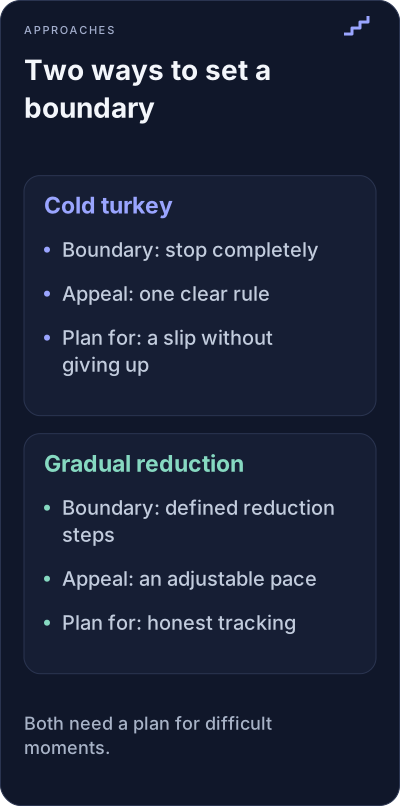
Stopping all at once has genuine advantages for some people:
- Clarity. One clear line — none — is simple to understand and leaves no room for negotiation.
- A clean reset. Some people find a full break helps their baseline recalibrate faster.
- No daily bargaining. You're not deciding "how much is okay today" every day.
The catch: cold turkey is fragile. Because the standard is perfection, a single slip can feel like total failure — and that all-or-nothing thinking is one of the most common reasons people abandon the effort entirely. When "one slip = I failed," slips end the whole project.
The case for gradual reduction
Gradual reduction means stepping down over time — less often, fewer situations, shrinking the habit deliberately rather than flipping a switch.
- It's more forgiving. Progress is a trend, not a perfect record, so a bad day doesn't erase everything.
- It builds real skills. Each step teaches you to handle cues and urges, which is what makes change stick.
- It's sustainable. Lower pressure means you're more likely to still be going in three months.
The catch: without structure, "gradual" can quietly become "barely trying." It needs a clear plan and honest tracking so reduction actually happens.
Which should you choose?
A few honest questions:
- How do you handle slips? If one mistake tends to make you spiral and quit, gradual reduction protects you from the all-or-nothing crash. If a clean line genuinely helps you, cold turkey may fit.
- How ingrained is the habit? The more automatic and frequent it is, the more a gradual step-down tends to help, because it builds coping skills along the way.
- What's failed before? If cold turkey has repeatedly ended in a big relapse, that's useful information — a different approach may serve you better.
You can combine them
Many people do best with a hybrid: reduce gradually to build skills and lower the baseline, then set a clear stop line once the habit is weaker and more manageable. The step-down does the hard preparation; the clean line finishes it.
Whichever you pick, the fundamentals are the same — know your triggers, plan replacements, and have a calm plan for after a slip. The overall framework is in how to stop watching porn.
What the evidence leans toward
Behavior-change research is mixed on abrupt vs. gradual across habits, but a consistent theme is that all-or-nothing standards raise the cost of a single slip, which can undermine long-term success. Approaches that treat setbacks as recoverable — and that build coping skills over time — tend to hold up. Overviews from Mayo Clinic and Harvard Health, and studies on PubMed/PMC, generally support structured, self-compassionate change over pure willpower.
A structured middle path
Reset Ladder is built around gradual, step-by-step reduction — a "ladder" you climb down at a sustainable pace, with room to slip and return without losing all your progress. It's the middle path: more forgiving than cold turkey, more structured than "just cut back."
The best method isn't the most dramatic one. It's the one you'll still be doing next month.
This article is general information, not medical or psychological advice. If this behavior is causing you significant distress, consider speaking with a licensed mental health professional.
FAQ
Is cold turkey more effective than cutting back? For some people, yes; for others it's too fragile and ends in an all-or-nothing relapse. It depends heavily on how you personally respond to slips.
Isn't gradual reduction just an excuse to keep going? Only without structure. With a clear plan and honest tracking, gradual reduction builds the coping skills that make the change durable.
Can I switch approaches partway? Absolutely. A common pattern is reducing gradually first, then setting a clean stop line once the habit is weaker.

Available on the App Store.
A structured plan to reduce or quit porn —
without shame, surveillance, or religion. Start your first cycle today.