Is Porn Addiction Real? What the Evidence Actually Says
Is porn addiction a real, recognized condition? An honest look at the scientific debate — and why the label matters less than whether the behavior is a problem for you.

This is a genuinely debated question among researchers and clinicians — not a settled one, in either direction. If you've seen confident claims on both sides, that's because the science itself is still catching up. Here's an honest look at where things stand.
What "addiction" would technically require
Classic addiction models (built mostly around substances like alcohol or nicotine) involve tolerance, withdrawal, and a compulsive pattern despite negative consequences. Some researchers argue compulsive porn use can show a similar pattern — escalating use, difficulty stopping, distress when trying to cut back. Others point out that the brain-scan and behavioral evidence for a true addiction model is a lot thinner and more mixed than it is for substance addiction, and that some studies find the "addiction" framing doesn't hold up well under closer scrutiny.
What the official classifications say
The World Health Organization's ICD-11 added Compulsive Sexual Behaviour Disorder (CSBD) in 2019 — but classified it as an impulse control disorder, explicitly, not an addiction. That's a meaningful distinction: it recognizes the behavior can become clinically significant and distressing, without taking a side on whether it works like substance addiction in the brain. The American Psychiatric Association's DSM-5, for comparison, doesn't include a specific "porn addiction" or "sex addiction" diagnosis at all.
Why the debate matters less than you'd think
Here's the practical part: whether or not it technically fits an "addiction" model doesn't change whether it's a problem for you. If porn use feels compulsive, if you've tried to cut back and struggled, if it's affecting your time, relationships, or how you feel about yourself — that's a real, worth-addressing pattern regardless of which clinical label ends up being correct. You don't need a settled diagnosis to justify wanting to change a habit.
The risk of over-claiming either direction
Calling it definitively "an addiction just like drugs" can overstate the neuroscience and lean into shame-based messaging ("your brain is broken") that tends to backfire — see how to quit porn without shame for why that framing often makes things worse, not better. But dismissing it entirely as "not a real thing, you're just lacking willpower" is just as unhelpful, and ignores that plenty of people genuinely struggle to change the pattern on their own.
A more useful question than "is it an addiction?"
Rather than settling the addiction debate, a more actionable question is: is this behavior something I want to change, and is it currently working against what I want for my life? If yes, the tools that help — mapping triggers (porn triggers), gradual reduction instead of all-or-nothing (gradual reduction vs. cold turkey), and a plan for slips — work regardless of what you call the underlying pattern.
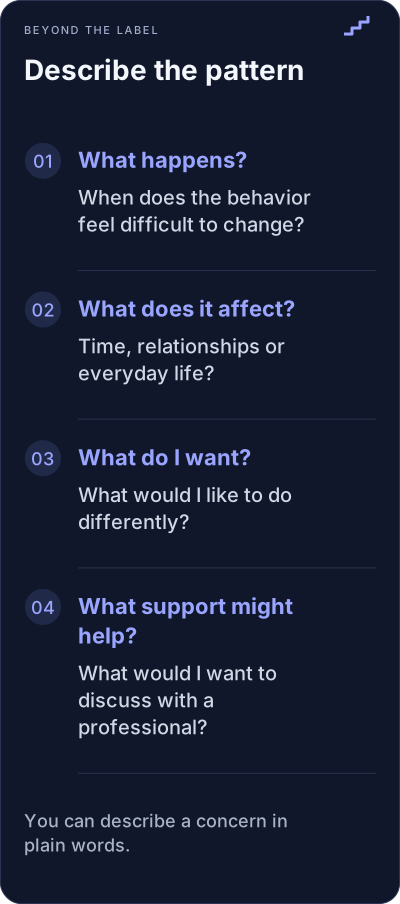
Built around the behavior, not the label
Reset Ladder doesn't require you to accept an "addiction" framing to use it. It's built for anyone who wants to reduce or quit — whether you think of it as a compulsive habit, an impulse-control issue, or just something you'd rather not keep doing.
This article is general information, not medical or psychological advice. If this behavior is causing you significant distress, consider speaking with a licensed mental health professional.
FAQ
Does the WHO officially recognize porn addiction? Not exactly — the ICD-11 recognizes Compulsive Sexual Behaviour Disorder, but classifies it as an impulse-control disorder, not an addiction.
Do I need a diagnosis to justify wanting to quit or cut back? No. Wanting to change a habit that isn't serving you is reason enough, regardless of clinical labels.
Is it harmful to call it "addiction" if it isn't technically one? It can be, mainly through shame — "addiction" language sometimes amplifies self-judgment, which research links to worse outcomes than a neutral, compassionate framing.
Available on the App Store.
A structured plan to reduce or quit porn —
without shame, surveillance, or religion. Start your first cycle today.