What to Do After a Porn Relapse Without Spiraling
A porn relapse does not have to become a full collapse. Learn what to do in the next 10 minutes, how to avoid the shame spiral, and how to recover cleanly.

For a lot of people, the relapse is not the real disaster.
The spiral after it is.
That’s the part that does the most damage.
Not just emotionally, but practically. One slip turns into three. A bad night turns into a bad weekend. What could have been a quick recovery becomes a full collapse, not because the first relapse “proved” anything, but because the reaction to it makes everything worse.
That reaction is usually some mix of shame, anger, hopelessness, and fake logic.
You tell yourself:
- “I already ruined it.”
- “This always happens.”
- “I knew I wasn’t serious.”
- “I’ll restart on Monday.”
- “The streak is gone anyway.”
And once that voice takes over, the next bad decision becomes easier.
That is why relapse recovery matters so much.
If you want to reduce porn use, you cannot build your whole system around the fantasy that you will never slip. You need a better plan for what happens after you do.
Because whether a relapse becomes a data point or a downward spiral depends a lot on the next ten minutes.
Why one relapse often becomes several
A lot of people think the first slip is what breaks the streak.
Usually, the real damage comes from the meaning you attach to it.
If you see a relapse as:
- total failure
- proof of weakness
- evidence that nothing is working
- a reason to give up for the rest of the day
then your brain starts acting accordingly.
That is how the “I already messed up” trap works.
It sounds small, but it is one of the most destructive thoughts in the whole cycle.
Because it gives you permission to stop caring.
And once you stop caring, the structure collapses. You stop logging. You stop interrupting. You stop noticing triggers. You stop trying to recover cleanly. You move from one mistake into passive surrender.
That is not honesty. It is just collapse wearing the mask of honesty.
A relapse is not the same as a full reset of your progress
This is one of the biggest things people get wrong.
They treat relapse like it deletes everything.
It doesn’t.
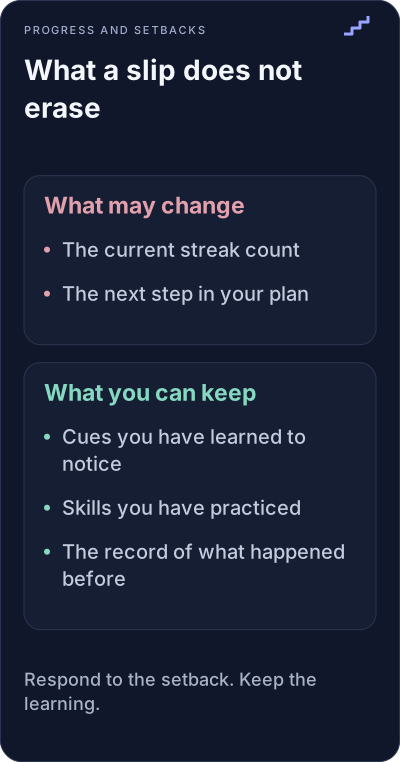
A relapse may break a clean streak. It may reveal a weak spot. It may show that your current system is not strong enough in a certain situation.
But it does not erase:
- awareness you’ve built
- triggers you’ve learned to recognize
- shorter recovery times
- reductions in frequency
- patterns you now understand
- progress in honesty and self-control
If you used to disappear for days and now catch yourself within minutes, that matters.
If you used to relapse automatically and now you at least understand what led to it, that matters.
If you used to spiral every time and now you recover faster, that matters too.
Progress does not become fake just because it is imperfect.
Shame feels like a response, but it isn’t a strategy
Shame can feel useful because it makes the moment feel serious.
It can even feel motivating for a few minutes.
But shame is terrible at helping people recover.
It creates intensity, not clarity.
This is not just an opinion. A 2022 longitudinal study published in PLOS ONE tracking people through recovery from compulsive substance use found that high levels of shame measurably delayed reduction over time. The researchers called the pattern a "shame spiral" — exactly the dynamic most people in porn recovery already recognize from the inside.
After a relapse, what you actually need is:
- honesty
- calm
- structure
- a useful next step
What shame gives you instead is usually:
- self-disgust
- dramatic promises
- mental noise
- hopelessness
- another binge
That is why people stay stuck for years inside the same loop: slip → shame → collapse → promise → tension → slip again
A calmer response is not softer in the wrong way. It is simply more effective.
What to do in the next 10 minutes
This is where most people need something concrete.
Not a philosophy. Not a long self-help speech. Just a clear response.
If you relapse, do this:
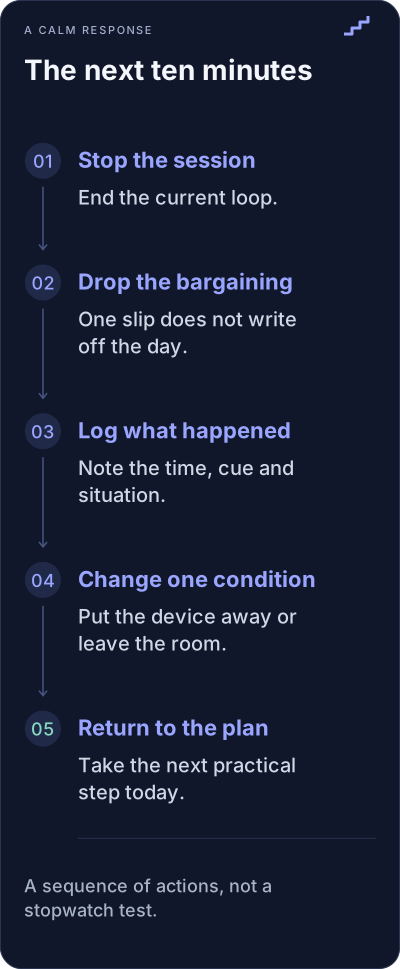
1. Stop the session
Do not turn one slip into a longer one just because you feel bad.
This sounds obvious, but it matters. The first win after a relapse is often simply ending the loop earlier than you used to.
2. Do not negotiate with yourself
Do not start thinking:
- “well, today is ruined”
- “I’ll restart tomorrow”
- “it doesn’t matter now”
Those thoughts are not insight. They are escalation.
3. Write down what happened
Keep it simple:
- what time it happened
- what triggered it
- what you were feeling before it
- what the build-up looked like
- what the first warning sign was
You are not writing a confession. You are collecting data.
4. Change one immediate condition
Remove the next easy step in the pattern.
Examples:
- close the laptop
- put the phone away
- leave the room
- take a shower
- go outside
- charge the phone somewhere else
- block the next mindless scroll session
Do not just sit in the same environment and promise yourself you’re done.
5. Reset quickly
Not emotionally. Structurally.
You do not need to “feel recovered” before you recover.
You just need to return to the process.
That matters more.
What to log after a relapse
People either log too much or nothing at all.
Too much detail turns the whole thing into an obsessive ritual. Nothing at all keeps it vague and useless.
A good relapse log usually only needs a few things:
- time
- trigger
- emotional state
- environment
- what happened just before
- what you want to change next time
That’s enough.
Over time, the value of this becomes obvious. You start seeing that the slips are not random. They cluster around:
- certain hours
- certain moods
- certain rooms
- certain screens
- certain kinds of fatigue
And once the pattern is visible, it gets harder to pretend the answer is just “I need more discipline.” (There's a separate piece on the seven most common trigger patterns and how to notice them earlier.)
The goal is not to avoid every mistake. It is to recover better.
This is a much healthier and more realistic target.
You are probably not going to handle every urge perfectly. You are probably not going to move through this without mistakes.
That’s fine.
The real question is: How fast can you recover without turning one mistake into a story about who you are?
That’s the difference between someone stuck in a habit loop and someone actually changing it.
Recovery speed matters.
Calm matters.
The ability to return to structure matters.
The ability to avoid a full spiral matters.
Those things do not always feel impressive in the moment, but they are the foundation of real change.
What makes spirals worse
Some things almost always make relapse recovery worse:
1. Staying in the same environment
If you stay in the exact same place, holding the same device, in the same mental state, recovery gets harder. (For most people, this matters most at night — the late-night setup is where most spirals start, and changing the environment is where they end.)
2. Making extreme promises
“I’ll never do this again.” “I’m done forever.” “This is the last time.”
Those promises often feel strong and collapse fast.
3. Turning the whole day into a write-off
This is one of the worst habits. A relapse at 11:20 PM is not the same as a ruined life. A relapse at 2 PM is not a reason to keep going until midnight.
4. Hiding from your own pattern
If you refuse to log, reflect, or adjust anything, you make the next relapse more likely.
5. Confusing punishment with progress
Feeling horrible is not the same thing as changing.
What actually helps after a relapse
These things tend to help much more than people expect:
1. Fast honesty
Not theatrical shame. Just immediate honesty.
What happened? What triggered it? What needs to change next?
2. Smaller recovery goals
Not “be perfect forever.” Just:
- stop now
- log it
- interrupt the pattern
- don’t spiral
- restart cleanly
3. Friction
Add friction before the next likely trigger window.
If the relapse usually follows:
- scrolling in bed
- late-night loneliness
- after-work exhaustion
- laptop in the bedroom
then change something before the next repeat.
4. A calmer identity
Do not turn relapse into proof that you are fake, weak, or doomed.
You are someone trying to change a learned behavior.
That is hard. Hard things include mistakes.
The next day matters less than the next hour
A lot of people postpone recovery.
They say:
- “I’ll start again tomorrow”
- “next week”
- “Monday”
- “after this weekend”
That delay is expensive.
Recovery works better when it starts immediately.
Not because you have to perform emotional purity. Just because the longer the spiral runs, the more momentum it builds.
The next hour matters more than the perfect symbolic restart date.
A better way to think about relapse
Try replacing: “I failed again.”
with: “A weak point in the system showed up again.”
That is not fake optimism. It is a more useful frame.
Because if the issue is a weak point in the system, then something can be adjusted:
- routine
- environment
- timing
- trigger response
- late-night structure
- device habits
- recovery plan
That is actionable.
Self-hatred is not. (The deeper version of this — why willpower keeps failing in general for porn recovery, and what to build instead — is covered in the pillar piece.)
What to do today
If you want a simple relapse plan, make one now before you need it.
Write down:
My relapse recovery plan
- If I slip, I stop immediately
- I log what triggered it
- I leave the environment where it happened
- I remove one immediate friction point
- I do not turn the day into a write-off
- I restart the process the same day
That is enough.
Not dramatic. Not perfect. Just useful.
And useful beats dramatic almost every time.
FAQ
Does one relapse mean I lost all my progress?
No. It may interrupt a streak, but it does not erase awareness, learning, or other improvements you’ve already made.
What should I do immediately after a relapse?
Stop the session, log what happened, change the environment, and avoid the “I already ruined it” mindset.
Why do I keep binging after one slip?
Because the spiral after the slip often becomes the real problem. Shame and “all-or-nothing” thinking make the second and third relapse easier.
Is relapse normal in recovery?
Yes. What matters is not pretending it never happens, but building a response that keeps one slip from becoming a collapse.
If recovering cleanly after a slip is the part you keep losing, Reset Ladder is built around exactly this principle — gradual cycles instead of all-or-nothing streaks, with explicit recovery built in so a single slip doesn't collapse the whole plan. It is available on the App Store.

Available on the App Store.
A structured plan to reduce or quit porn —
without shame, surveillance, or religion. Start your first cycle today.