How to Quit Porn Without Religion: A Secular, Practical Approach
How to quit porn without religion — a secular, shame-free approach based on habits and evidence, not morality or willpower.

A lot of advice about quitting porn comes wrapped in religion, purity, or moral language. If that framework doesn't fit you, it can feel like the only options are guilt-based programs or nothing at all. But you don't need faith or shame to change this habit. Here's how to quit porn without religion — using habits and evidence instead of morality.
Why a secular approach can work better for some people
When the reason to change is "this is a sin," a slip becomes a moral failure, and moral failure tends to spiral into shame — which research consistently links to more of the behavior, not less. A secular framing sidesteps that trap. You're not a bad person breaking a rule; you're a person adjusting a habit that isn't serving the life you want.
That reframe matters. It turns quitting from a battle against yourself into a practical project you can actually manage.
Start with your own "why" — not someone else's
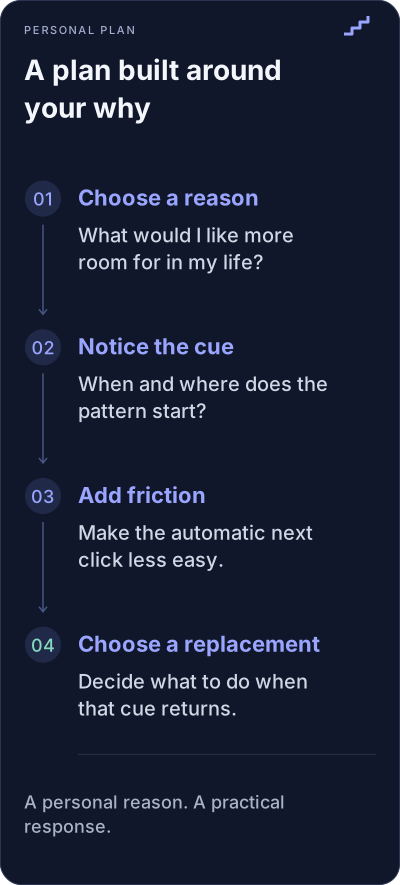
Without religion supplying the reason, you get to define your own. Be specific and personal:
- I want more energy and focus for things I care about.
- I don't like how much time this quietly takes.
- I want my attention and intimacy to feel like mine again.
Write your reasons down in plain language. When motivation dips, a concrete personal "why" holds up far better than a borrowed one.
Treat it as a habit, not a sin
Behaviorally, this is a habit loop: a cue (stress, boredom, being alone, late nights), a routine, and a reward (relief, distraction, a dopamine hit). You change it the way you change any habit — by working with the loop, not by hating yourself. We break the loop down in how to stop watching porn, and mapping your specific cues in porn triggers.
The practical moves:
- Identify your cues. Notice when and where it usually happens. Most people find it clusters around a few predictable triggers.
- Add friction. Make access less automatic — sign out, use content blockers, don't keep the door wide open.
- Plan a replacement. For each cue, decide what you'll do instead (walk, message a friend, a specific task). Removing a habit leaves a gap; fill it.
- Change the environment. A lot of this is situational — being alone with a device late at night. Change the situation and you change the odds.
Expect slips, and don't moralize them
Without religion, a slip is just data, not a fall from grace. What happened right before? What can you adjust? People who recover aren't the ones who never slip — they're the ones who return quickly and calmly. There's a practical playbook in what to do after a relapse.
What the evidence suggests
Research on habit change and compulsive behaviors generally points the same way: shame-based approaches tend to backfire, while self-compassion, environment design, and replacement behaviors tend to help. Reputable overviews from sources like Mayo Clinic and Harvard Health, and studies indexed on PubMed/PMC, support the habit-and-environment framing over willpower alone. (For anything causing real distress, a licensed therapist — especially one who works with compulsive behaviors — can help without any moral framing.)
A tool built to be secular
Reset Ladder is designed around exactly this: a gradual, secular, shame-free way to change the habit. No moral language, no streak you're terrified to break — just a practical structure for reducing over time and getting back on track after a slip.
You don't need religion, and you definitely don't need shame. You need a clear reason, an understanding of your cues, and a plan you can return to.
This article is general information, not medical or psychological advice. If this behavior is causing you significant distress, consider speaking with a licensed mental health professional.
FAQ
Can you really quit porn without a faith-based program? Yes. The mechanisms that drive change — understanding cues, adding friction, replacing the routine, self-compassion — are behavioral, not religious.
Isn't shame a good motivator? Short-term maybe, but research links shame to relapse, not recovery. Self-compassion tends to produce more durable change.
Where do I start today? Write your personal reasons, then note the two or three situations where it usually happens. That map is the foundation for everything else.

Available on the App Store.
A structured plan to reduce or quit porn —
without shame, surveillance, or religion. Start your first cycle today.