What to Do When You Keep Relapsing (Not Just Once)
Repeated slips feel different from a single relapse. Here's how to respond when it keeps happening — without spiraling into all-or-nothing thinking.

A single slip has a clear playbook: pause, don't spiral, get back to your plan (see what to do after a relapse). But what about when it's not one slip — it's the third one this month, and the "just get back on track" advice is starting to feel hollow? Repeated relapses need a different response than a single one.
First: repeated slips are information, not a verdict
The instinct after several slips in a row is to conclude "this doesn't work" or "I'm just not capable of this." Neither conclusion is actually supported by what happened — what happened is that your current plan isn't matching your current reality, which is a solvable problem, not a character verdict.
Look for the pattern across the slips, not just the latest one
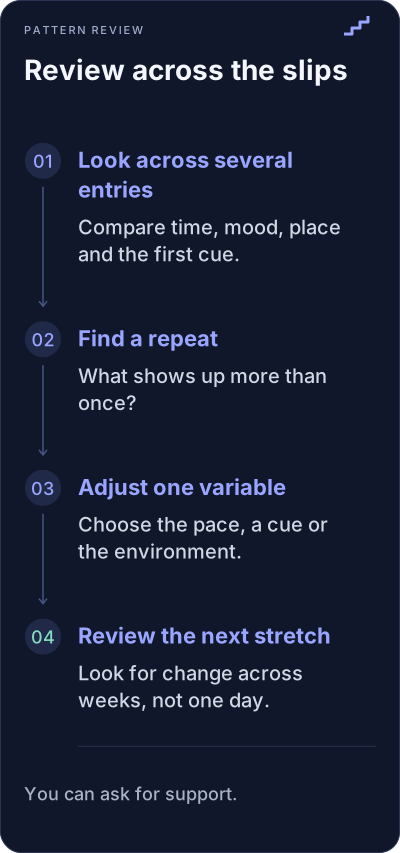
A single slip might have one obvious trigger. Repeated slips usually share something — same time of day, same emotional state (stress, boredom, loneliness), same specific trigger you haven't actually addressed yet. Pull up your last several entries and look across them, not just at today's. If you haven't been mapping this, start with porn triggers — the pattern is usually more visible in aggregate than in any single incident.
Check whether the pace is actually right for you
Repeated relapses are often a sign the plan is too aggressive, not that you're failing at a reasonable one. If you jumped straight to a hard "never again" cutoff, repeated slips are a predictable outcome, not a personal failure — see gradual reduction vs. cold turkey. Easing the pace back a step isn't giving up; it's recalibrating to something you can actually sustain, which beats a stricter plan you keep breaking.
Watch for the shame loop specifically
Repeated slips tend to compound shame faster than a single one — each new slip feels like proof the last round of self-criticism "should have worked," which piles on more shame, which (per how to quit porn without shame) tends to fuel the exact behavior you're trying to change. If you notice the internal voice getting harsher with each repeat, that voice is very likely part of the problem, not a helpful motivator.
When it might be worth bringing in outside support
If repeated relapses are causing significant distress, affecting a relationship, or you've tried adjusting the approach several times without any shift, that's a reasonable point to talk to a therapist or counselor — not because self-directed change has "failed," but because some patterns genuinely benefit from outside perspective. That's not a last resort; plenty of people use professional support alongside a self-directed plan.
What actually tends to help
- Zoom out to weeks, not days. A pattern across a month tells you more than any single relapse.
- Adjust one variable at a time — pace, a specific trigger, an environmental change — rather than overhauling everything at once.
- Track trend, not streak. Repeated slips can make a streak-based system feel like constant failure; a trend view (are slips spacing out over time, even slowly?) is a fairer measure of real progress.
Built to handle exactly this
Reset Ladder treats a slip as a step back in a gradual plan, not a full reset — and repeated slips within a short window trigger a gentler, adjusted pace automatically rather than punishing you further. The goal is a plan that flexes with reality instead of breaking every time reality doesn't cooperate.
This article is general information, not medical or psychological advice. If relapses are frequent, distressing, or affecting your relationships or daily life, consider speaking with a licensed mental health professional — repeated patterns like this often benefit from outside support.
FAQ
Does relapsing repeatedly mean I can't quit? No — it usually means the current plan or pace doesn't match your situation yet, not that change is impossible.
Should I switch to a stricter approach if a gentler one isn't working? Not necessarily — repeated relapses are often a sign the current approach is already too strict, not too lenient. Consider easing the pace before tightening it.
When should I consider professional help? If relapses are frequent, causing real distress, or affecting a relationship, and self-directed adjustments haven't helped after a genuine try — that's a reasonable point to loop in a therapist.

Available on the App Store.
A structured plan to reduce or quit porn —
without shame, surveillance, or religion. Start your first cycle today.